How Anxiety and Stress Affect Body Mind and Daily Life and How Therapy Helps

Anxiety and stress can make a normal day feel heavy. Your chest feels tight. Your thoughts won’t slow down. Small tasks take more energy than they should. And because it’s happening inside your body and mind at the same time, it can be hard to explain to someone else.
The good news is that these struggles are common, real, and treatable. Therapy can help people understand what’s happening, calm the body’s stress response, and build steadier ways to cope.
This article is for general information and isn’t a replacement for medical or mental health care. If symptoms feel intense, last a long time, or make daily life hard, reaching out for support is a strong next step.

Anxiety and stress are common, but they’re not “just in your head”
Stress is the body’s response to pressure. It can come from work, family needs, money concerns, health worries, major life changes, or too many small demands stacked together.
Anxiety is often more persistent. It can feel like fear, dread, racing thoughts, or a sense that something bad is about to happen, even when there’s no clear danger in front of you.
The World Health Organization estimates that about 301 million people worldwide were living with an anxiety disorder in 2019.
In the United States, the National Institute of Mental Health has reported that nearly 1 in 3 adults experiences an anxiety disorder at some point in life. Stress is even more widespread, with national surveys often showing that money, health, safety, and the future weigh heavily on many adults.
So if this feels familiar, it doesn’t mean you’re weak. It means your nervous system may be carrying more than it can comfortably handle.
What anxiety and stress do to the body
When the brain senses a threat, the body gets ready to protect you. Your heart beats faster. Breathing changes. Muscles tighten. Digestion slows. This reaction can be helpful in a real emergency.
The problem is that modern stress often doesn’t end quickly. Bills, conflict, caregiving, grief, burnout, and constant worry can keep the body on high alert.
Over time, anxiety and stress may contribute to:
Headaches or migraines
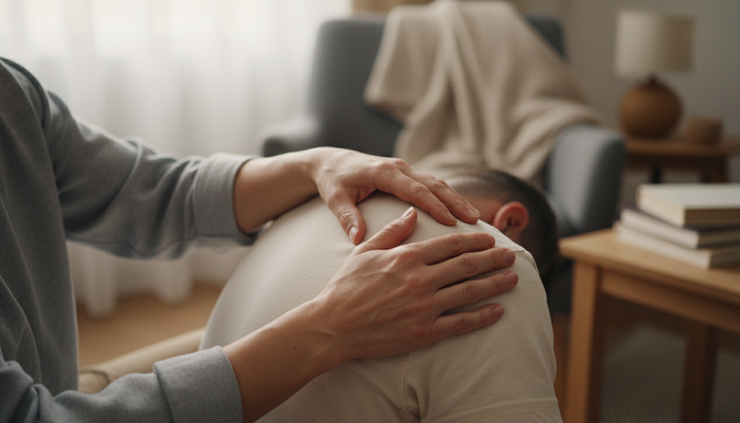
Muscle tension, especially in the neck, shoulders, or jaw
Stomach pain, nausea, or changes in appetite
Trouble sleeping or waking up tired
Chest tightness or a racing heart
Fatigue that doesn’t match the amount of rest
Higher blood pressure in some people
Lower interest in movement, meals, or self-care
Research has long linked ongoing stress with poorer physical health, especially when people have little rest, support, or time to recover. The body isn’t built to stay in alarm mode all day.
What anxiety and stress do to the mind
The mental side can feel just as draining as the physical side. Anxiety often makes thoughts louder and harder to sort through. Stress can make patience shorter and emotions closer to the surface.
People may notice:
Constant “what if” thoughts
Trouble focusing or making decisions
Feeling overwhelmed by small tasks
Irritability or snapping at others
Fear of making mistakes
Restlessness or feeling unable to relax
Sadness, numbness, or hopeless feelings
Anxiety and depression can also overlap. Someone may feel worried all day, then feel exhausted and low because they can’t get relief. That’s one reason the connection between anxiety, depression, therapy, health matters so much. The mind and body work together, so care often needs to support both.
How daily life can start to shrink
One hard part about anxiety and stress is how quietly they change routines. A person may stop answering texts, avoid driving, skip errands, or put off simple chores because everything feels like too much.
Daily functioning can be affected in practical ways:
At home
In relationships
At work or school
In the body
Laundry piles up, meals become irregular, sleep gets off track.
People may withdraw, argue more, or feel guilty for needing space.
Focus drops, deadlines feel heavier, and mistakes can feel scary.
Low energy and tension make regular tasks feel harder.
Understanding the impact of anxiety, impact of stress included, helps explain why “just relax” isn’t useful advice. If relaxing were that easy, most people would already be doing it.

How therapy helps you feel less alone and more steady
Therapy gives people a safe place to slow down and make sense of what’s happening. It’s not about being judged or told to “think positive.” Good therapy helps connect the dots between thoughts, emotions, body signals, habits, and life experiences.
Different approaches can help in different ways.
Talk therapy helps you understand patterns
Talk therapy gives space to name what’s been building up. A therapist may help identify triggers, old beliefs, relationship patterns, or sources of pressure that keep stress going.
This can be especially helpful when someone keeps thinking, “Why am I like this?” Therapy can shift that question toward, “What happened, what am I carrying, and what support do I need now?”
Small steps can support therapy between sessions
Therapy is powerful, but daily habits also matter. Small steps can help the body feel safer and more regulated.
Take slow breaths with longer exhales for one minute.
Step outside for fresh air or sunlight.
Eat something steady if you’ve skipped meals.
Write down worries instead of holding them all in your head.
Limit caffeine if it worsens racing thoughts.
Keep one simple routine, like a regular bedtime or morning walk.
The goal isn’t perfection. The goal is giving your body and mind more chances to recover.
When it’s time to reach out
Getting help makes sense when anxiety or stress starts affecting sleep, health, relationships, work, school, or basic routines. It also makes sense if you’re tired of handling everything alone.
If you’d like to talk with someone and see what support could look like, you can schedule a free 15-minute consultation.
Anxiety and stress can touch nearly every part of life, but they don’t have to run it. With the right support, people can learn what their symptoms are saying, care for their bodies, and build a life that feels calmer, steadier, and more manageable.

Comments